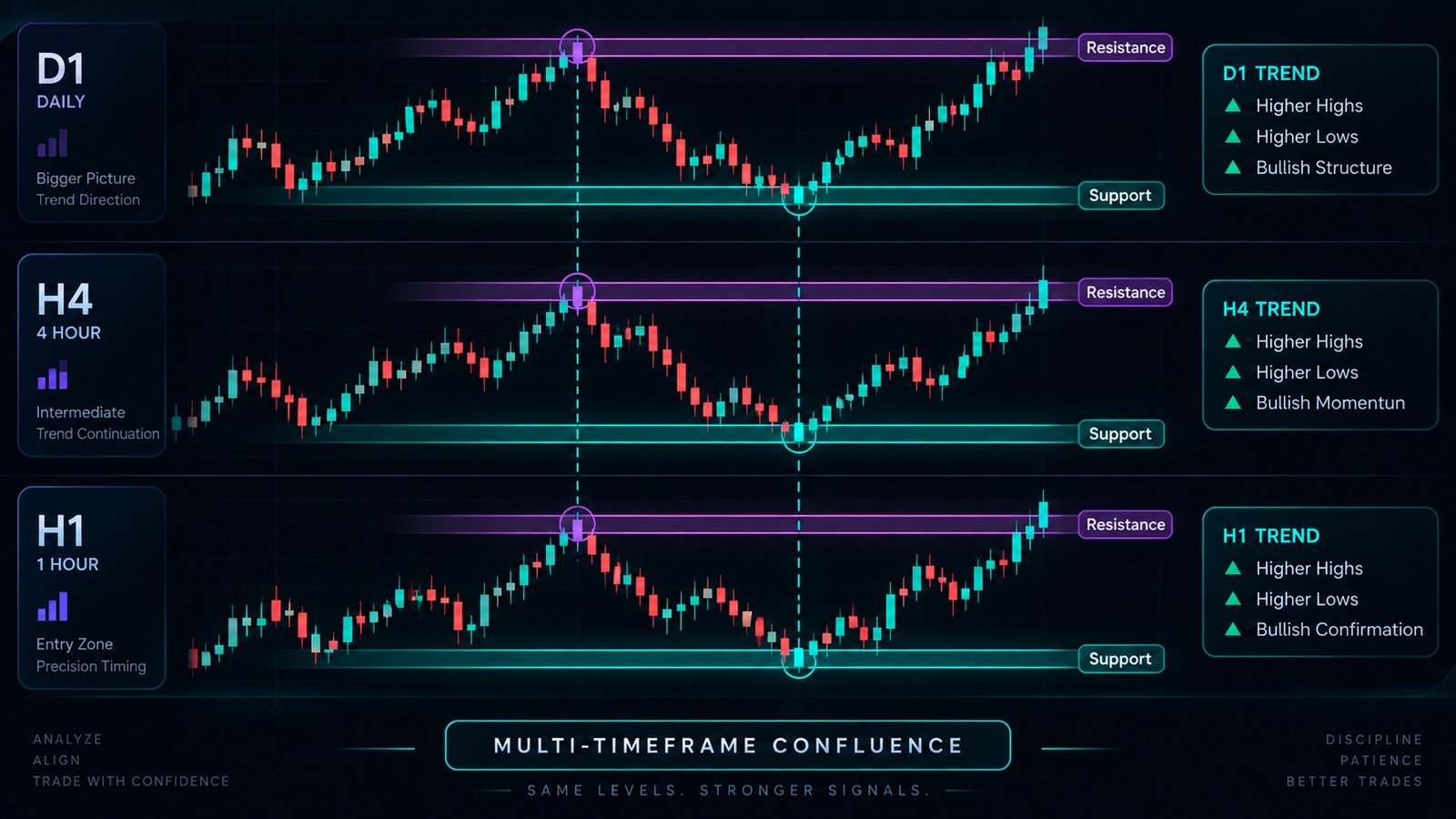
NAS100 is the tech trader's index. Nasdaq 100 tracks the 100 largest non-financial Nasdaq companies — dominated by Apple, Microsoft, Nvidia, Amazon, Alphabet, Meta, and Tesla. When AI hype cycles run, NAS100 leads. When rate fear hits, NAS100 falls first. That volatility makes it the best breakout instrument in the index space — if you know how to trade it.
Why NAS100 respects levels better than other indices
Nasdaq 100 is heavily concentrated: the top 7 stocks make up nearly 45% of index weight. This means Nasdaq trades more like a mega-cap tech ETF than a broad market gauge. When the "Magnificent Seven" agree on direction, price runs. When they diverge, price chops.
The upside for level traders: institutional order flow clusters at round numbers because algo desks all size positions using the same round-number brackets. 20,000. 21,000. 22,500. These aren't Fibonacci fantasies — they're where the big money physically sits. Our AI zones anchor to this behavior.
The breakout setup that actually works
Not every breakout is tradeable. Most fail because the trader chased before liquidity arrived. Here's the version that consistently works on NAS100 during high-volume US sessions:
- Consolidation first. NAS100 must have traded inside a range of 150 points or less for at least 4 hours. Compression precedes expansion — always.
- Level bracket identified. Both edges of the range must line up with a LevelEngine buy above / sell below zone. If not, wait — the range hasn't matured.
- Volume confirmation. The breakout candle must close above (or below) the range edge with visible volume expansion. Wick-only breakouts don't count.
- NY session only. Never trade Nasdaq breakouts during Asian hours. The tape is too thin and fakeouts dominate.
The best NAS100 breakouts happen in the first 60 minutes of NY cash. If nothing has broken by 15:00 UTC, the day is a chop day. Stand down.
The three earnings weeks that matter
NAS100 turns into a different animal during Magnificent Seven earnings weeks. Late January, April, July, October — mark these on your calendar and reduce size.
Individual earnings can gap NAS100 200+ points on the open. Historically, a single Nvidia or Apple earnings miss has been enough to trigger 3-4% overnight gaps on Nasdaq. No technical level survives that kind of shock. If you're holding through earnings unhedged, you're not trading — you're gambling.
Sizing NAS100 correctly
NAS100 average true range on D1 is 300-400 points. Stops need room to breathe or they get stopped by noise. A typical setup uses a 100-150 point stop.
At $1/point per lot (most CFD brokers), a 100-point stop equals $100 risk per lot. On a $5,000 account with the 1% rule, that's 0.5 lots max. Don't stack more just because Nasdaq feels one-directional. It never is for long.
What separates NAS100 from US30
- Rate sensitivity: NAS100 falls harder on hawkish Fed news than US30. Growth stocks discount future cash flows — higher rates crush that valuation.
- AI narrative: NAS100 is the AI beta. Any major AI headline (OpenAI raise, Nvidia product launch, model releases) moves it. US30 barely notices.
- Concentration: If Nvidia moves 4%, NAS100 moves 1% just from that. US30 has no single-stock exposure that large.
- Volatility: Nasdaq averages ~30% higher daily range than Dow. Use tighter position sizing.
The trade to avoid
Do not short NAS100 during a confirmed uptrend just because "it looks extended." Nasdaq bull runs routinely go 15-20% without a meaningful pullback. Retail short squeezes on NAS100 are the fastest way to blow an account we've seen. Wait for the D1 buy above zone to break with volume before considering a short. Trend is your friend until proven otherwise.
Where to get the daily levels
Free tier: daily NAS100 buy above / sell below zones, updated at 23:00 UTC. Pro tier: live H1 and H4 refreshes throughout the NY session, plus Copilot AI that can explain each level in plain English.
See today's NAS100 levels or open the terminal to chart it live.
Educational content only. Not financial advice.