Most traders lose money not because they pick the wrong direction but because they pick the wrong ratio. If your stop is 20 pips and your target is 20 pips, you need to win 55%+ just to break even after spread. That's a bad hand to play, forever.
The math nobody teaches
Let's run three scenarios on 100 trades:
- 1:1 R:R, 50% win rate. 50 winners × 1R = +50R. 50 losers × -1R = -50R. Net: 0. Break-even before spread. Losing after spread.
- 1:2 R:R, 40% win rate. 40 winners × 2R = +80R. 60 losers × -1R = -60R. Net: +20R. Profitable even at 40% win rate.
- 1:3 R:R, 35% win rate. 35 winners × 3R = +105R. 65 losers × -1R = -65R. Net: +40R. Very profitable at just 35% win rate.
The point: win rate matters less than R:R. Amateurs chase high win rates. Pros chase R:R.
Why 1:1 sounds fine but isn't
You need to overcome spread and commission on every trade. On EURUSD, that's roughly 0.5-1 pips per round trip. On XAUUSD, it can be 3-5 pips. On top of that you have slippage and the occasional bad fill.
All of that eats into your winners but doesn't help your losers. So 1:1 with 50% win rate is actually losing after real-world costs. You need 1:1 with 55%+ to break even, and that's hard to sustain.
How to place stops correctly
Stops must be placed at invalidation levels, not arbitrary pip counts. Where does your idea stop being right?
- Long from a support zone → stop below the support zone, not 20 pips below entry.
- Long on a bullish engulfing → stop below the engulfing candle's low.
- Trend-following entry → stop below the last swing low that would invalidate the trend.
Your stop tells the market: "If price goes here, I'm wrong." If you can't answer that, you don't have a real entry.
How to set targets
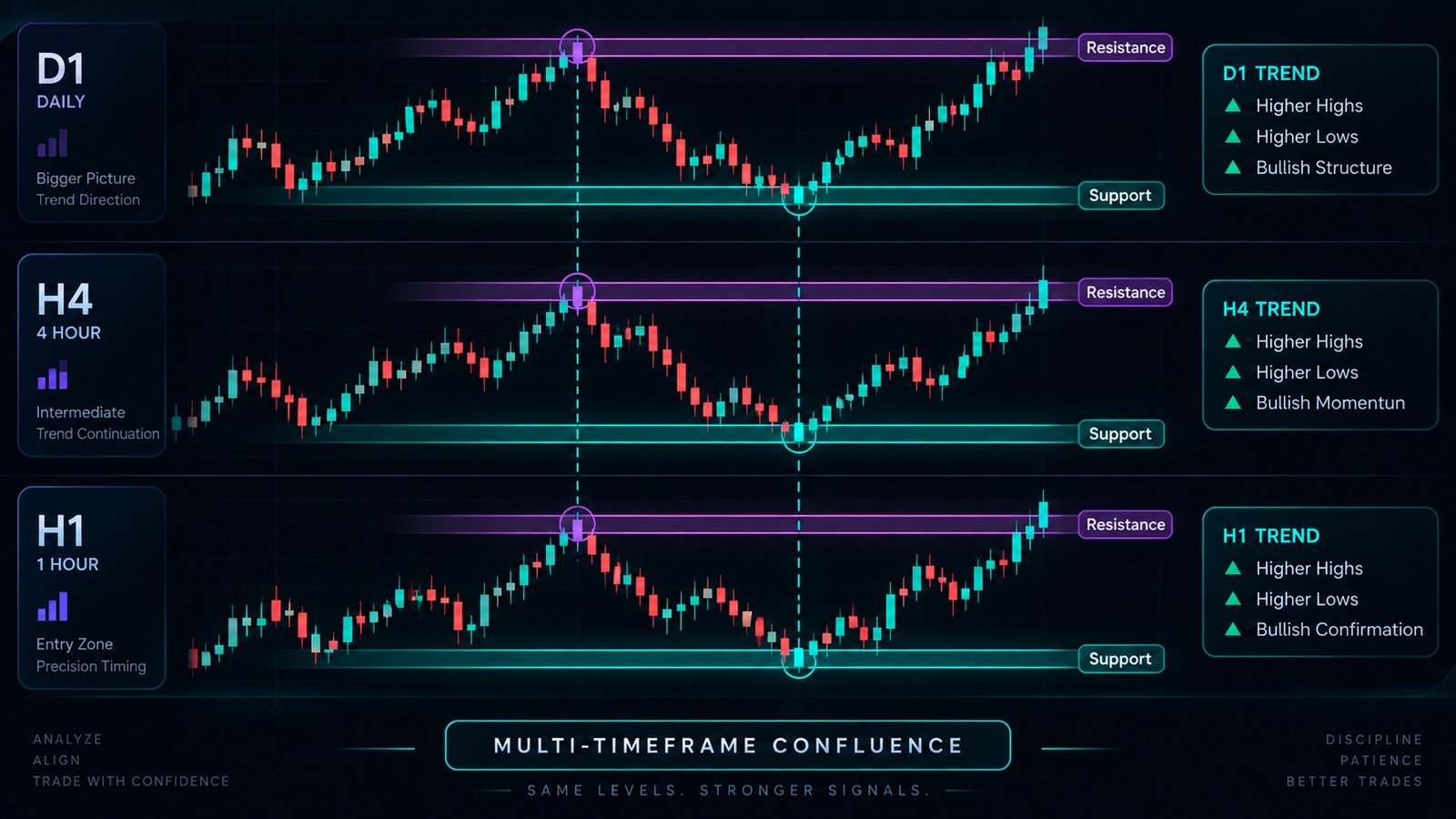
Targets belong at real levels too. Next resistance for a long. Next support for a short. Round numbers. Session highs/lows. Anywhere real traders take profit.
If the next real target gives you less than 1.5R from your stop distance, skip the trade. There will be another.
Trades aren't judged by whether they won or lost. They're judged by whether they were worth taking — and that comes down to the ratio you had going in.
Trail vs fixed
Once price moves in your favor by 1R, move your stop to breakeven. This locks in a free option. If it goes to 2R, trail your stop to 1R and let the rest run.
Trailing keeps you in the winners longer without giving back the whole trade if it reverses. This is where average R rises from 1.5R to 2.5R over time.
Terminal helps you here
The LevelEngine terminal auto-computes R:R for every signal. If it's below 1.5, the signal is greyed out. If it's 1.5-2.0, it's yellow. Above 2.0, green. You never have to trade a bad R:R again.
Educational content only. Not financial advice.